
Dental implants are often referred to as “the third set of teeth for humans,” but they are not a one-time solution. Many people may experience issues such as the crown falling off, the screw coming loose, or even the most worrying scenario: the implant itself becoming loose several years after the procedure.
When these problems occur, don’t panic, and definitely don’t try to fix them yourself. This article will provide detailed guidance on what to do if your dental implant falls out, helping you regain a healthy smile in no time.
I. Understanding the structure of dental implants: Which part has fallen off?
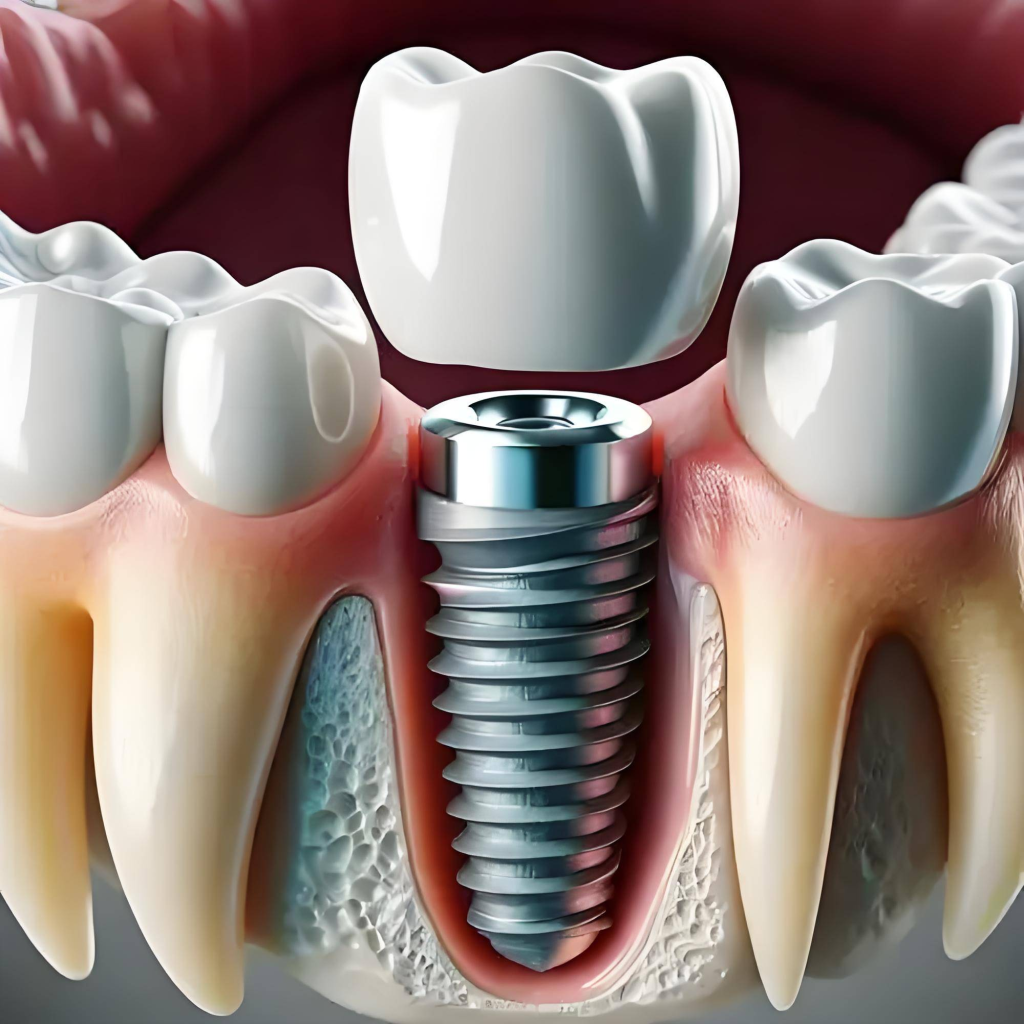
Before discussing solutions, it’s important to understand the basic structure of dental implants. An implant typically consists of three main parts:
- Implant base: The “artificial root” that is placed into the jawbone.
- Abutment: The connector that links the implant base to the crown, usually secured with a screw or bolt.
- Crown: The white prosthetic tooth that we see when looking at it.
II. Scenario 1: The dental crown falls off
This is the most common situation and usually does not involve any bone-related issues, making it relatively easy to resolve.
1. Reasons for loss:
- Adhesive aging: The adhesive used for dentures loses its effectiveness over time.
- Excessive biting force: Regularly biting on hard objects such as bones or crab legs can cause dentures to loosen.
- Screw loosening: If the screws inside the abutment teeth become loose, the upper crowns will fall off as well.
2. Emergency steps:
- Retain the crown: Find the fallen denture, rinse it with clean water, dry it, and store it in a small container.
- Clean the mouth: The wound at the site where the denture fell may trap food debris; gently brush your teeth to keep it clean.
- Do not attempt to reattach it yourself: Commercial quick-set adhesives are toxic and have uneven thicknesses; forcing them back on could damage your bite and even cause inflammation.
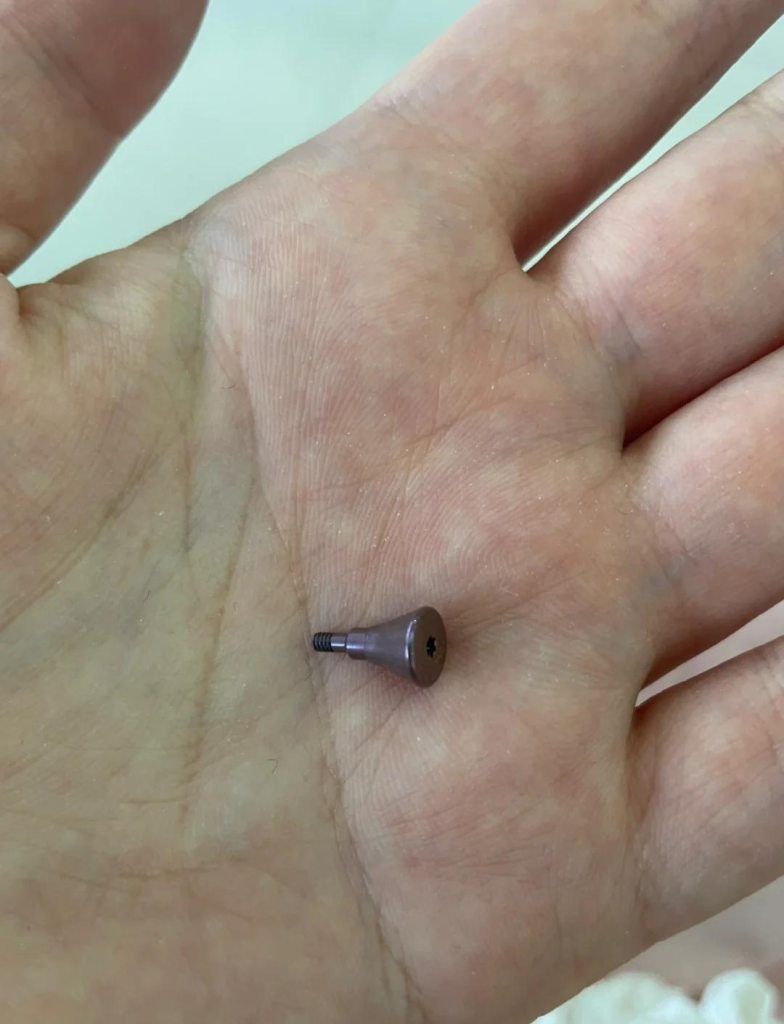
III. Scenario Two: The dental implant screw falls off (part comes loose)
Sometimes you may find that what comes out is a small metal screw, or you might feel a hole in between your teeth.
1. Cause analysis:
This is usually due to screw fatigue or insufficient torque during installation. Long-term chewing can cause tiny vibrations, eventually leading to the nut coming loose.
2. Potential risks:
If the implant nut falls out and is ignored, the abutment tooth may break inside the implant due to uneven forces, making treatment much more difficult later on.
IV. Scenario three: The most serious warning—implant shaking
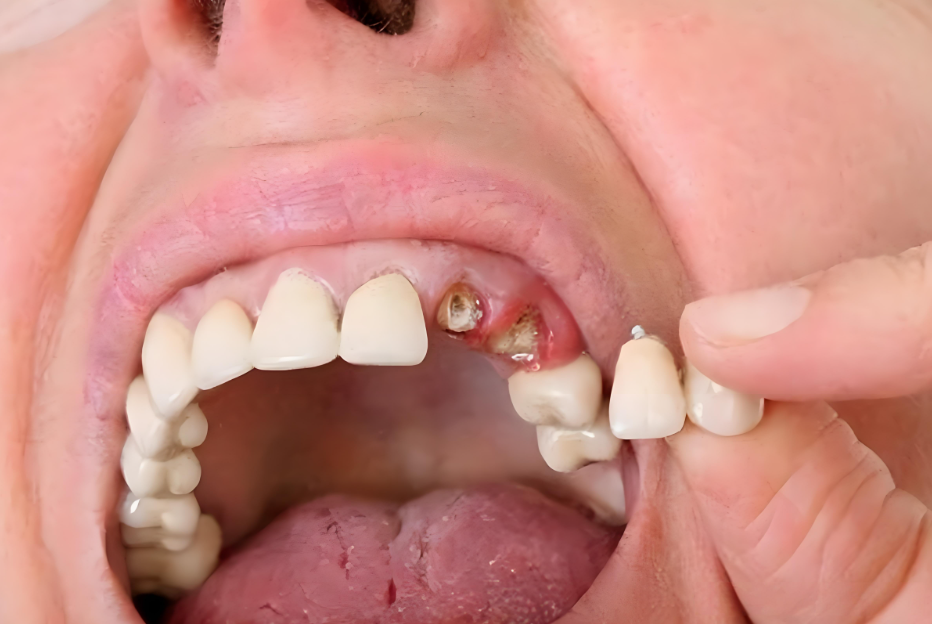
If you feel that it’s not the denture itself that is moving, but the gum surrounding it, this often indicates a risk of implant loss.
1. Main cause: Peri-implantitis
This is essentially the “periodontal disease” of implants. Poor oral hygiene allows bacteria to erode the bone around the implant, leading to bone loss and ultimately the loss of support for the artificial tooth root.
2. Other factors:
- Implant failure: Poor osseointegration in the early postoperative period.
- Changes in physical condition: Such as uncontrolled diabetes, severe osteoporosis, etc.
3. Treatment measures:
In this case, immediate follow-up is necessary. The doctor may need to perform debridement surgery or apply bone graft material. If the bone loss is severe, the implant may need to be removed and replaced once the bone has healed.
V. What to do if a dental implant falls out? SOP emergency procedure
If any part falls off, please follow these steps:
- Stop the bleeding calmly: If there is bleeding, first apply pressure with clean cotton to stop it.
- Keep the part: Whether it’s a denture or a small screw, bring it back to the doctor for evaluation.
- Maintain cleanliness: Use an alcohol-free mouthwash to prevent inflammation in the area.
- Switch to chewing on the opposite side to avoid additional stress.
- Make an appointment for a check-up: Contact your original dentist or seek a second opinion through a professional platform.
VI. Prevention is better than cure: How to extend the lifespan of dental implants?
- Regular check-ups every six months: The dentist will check if the screws are loose and clean any bacteria beneath the implant.
- Use interdental brushes: Since dental implants have no nerves, you won’t feel pain; therefore, it’s essential to use interdental brushes to clean the gaps.
- Quit smoking: Smoking significantly reduces the success rate and lifespan of dental implants.
- Protect against night bruxism: If you grind your teeth at night, make sure to wear a bite guard to protect your implants.
VII. Professional consultation and guidance: Use BeautsGO to find top-notch dental implant clinics.
If you are living out of town (for example, a Hong Kong resident going to Shenzhen or South Korea for dental implants) and encounter problems with implant loss, or if you are dissatisfied with the current treatment results, using the BeautsGO platform can help you quickly connect with top clinics specializing in dental implant restoration.
Why choose BeautsGO?
- Specialist Selection: The platform provides a list of specialists in prosthodontics who specialize in dealing with failed dental implants or detached components.
- Transparency in Reviews: View real reviews from other patients about how this clinic handles cases of dental implant detachment.
- Cross-border Support: If your dental implant was placed in South Korea, BeautsGO can help you schedule an appointment at a certified clinic in South Korea for replacement of the original parts.
- Immediate Consultation: By uploading photos of the detached part through BeautsGO, medical consultants can provide an initial assessment of the severity.
3 Steps to Schedule with BeautsGO:
- Access the Platform: Log in to the BeautsGO website and search for “dental implant repair” or “prosthodontics”.
- Consult a Consultant: Describe your issue (for example, a dental implant crown has fallen off) to receive initial advice and a quote.
- Confirm the Appointment: Pay a small deposit, and the system will reserve a priority slot for you with a specialist.
The loss of a dental implant crown or screw does not necessarily mean the implant is failed. With timely treatment, most cases can be easily repaired. However, if the implant itself begins to shake, it is a serious warning sign from your body.