

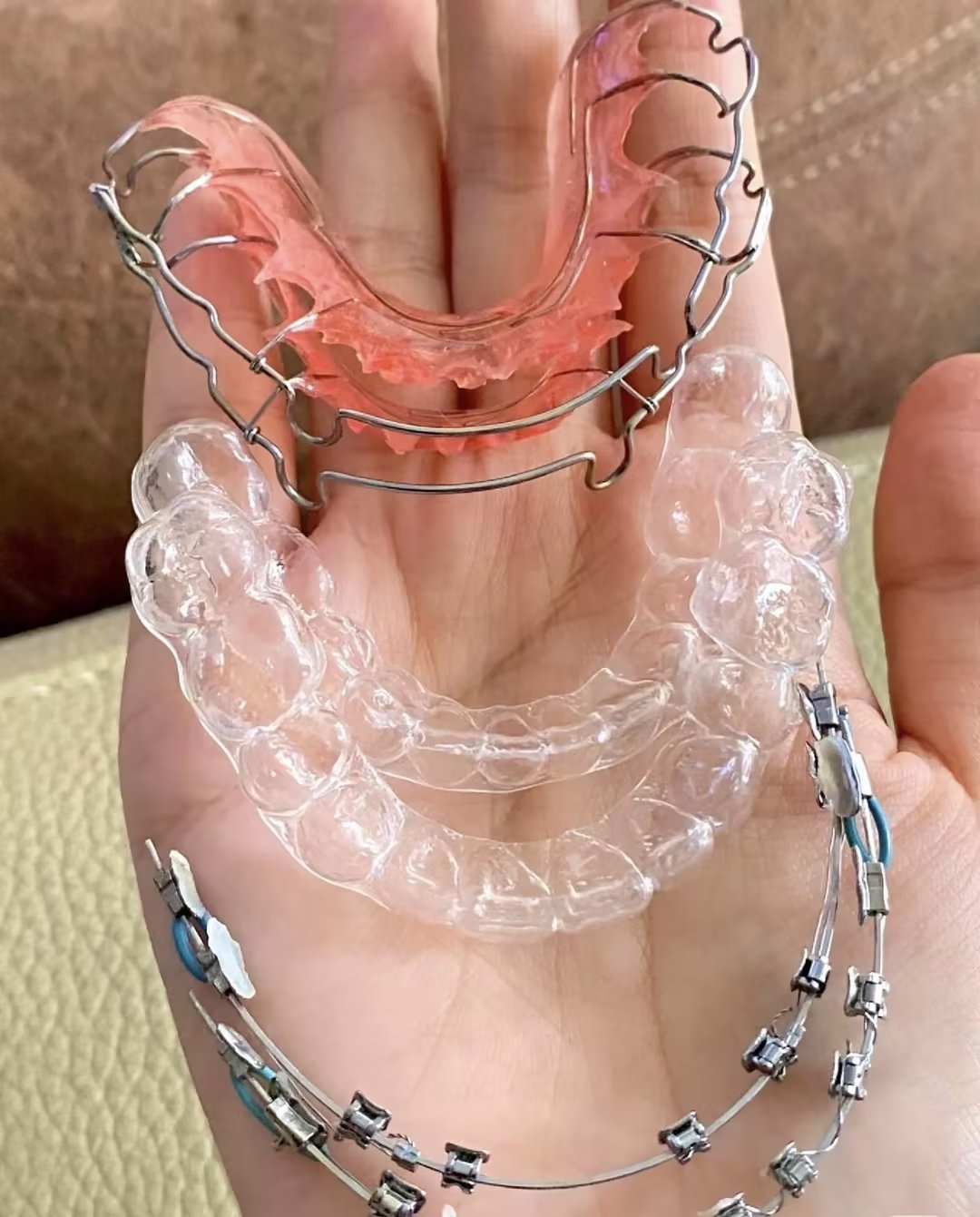
Which is better, invisible braces or metal braces? Understand the key differences with one diagram
From a professional perspective, this article uses one diagram to help you quickly determine which option is most suitable for you. (Exchange rate note: Based on the latest exchange rate on April 1, 2026, 1 Chinese yuan ≈ 218.51 South Korean won. The amounts in South Korean won below are estimated values; actual conversion should be based on the real-time rate)
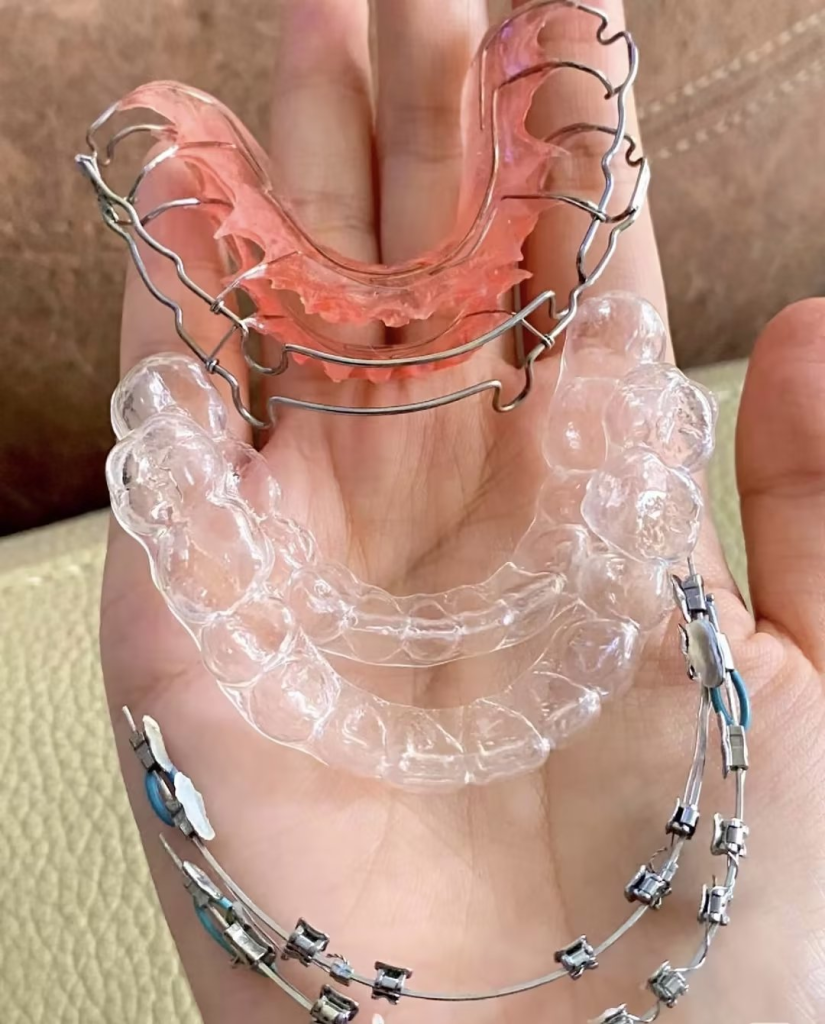
Invisible braces vs Metal braces
Let’s start with the conclusion: there is no absolute “best” option, only the one that “fits you best”. Below, we compare them from six aspects:
| Comparison criteria | Invisible braces (such as Invisalign) | Metal braces (traditional metal brackets) |
|---|---|---|
| Aesthetics | ⭐⭐⭐⭐⭐ Almost transparent; hardly noticeable when maintaining social distancing | ⭐⭐ Metal brackets are very noticeable; commonly referred to as “steel teeth”. |
| Comfort | ⭐⭐⭐⭐ Smooth material that doesn’t scratch the mouth. | ⭐⭐⭐ Brackets and wires may rub against the oral mucosa. |
| Correction results | ⭐⭐⭐⭐ Suitable for mild to moderate cases; may be less effective for severe cases. | ⭐⭐⭐⭐⭐ Almost suitable for all complex cases. |
| Ease of use | ⭐⭐⭐⭐ Can be removed easily; allows normal eating and brushing. | ⭐⭐ Fixed-type braces; avoid hard and sticky foods. |
| Frequency of Follow-up Appointments | ⭐⭐⭐⭐ Once every 6–8 weeks | ⭐⭐⭐ Once every 4–6 weeks, with frequent adjustments |
| Price Range | Approximately 30,000–80,000 RMB (about 6.5553 million–17.4808 million KRW) | Approximately 10,000–30,000 RMB (about 2.1851 million–6.5553 million KRW) |
Who Is Suitable for Invisible Braces?
If you meet the following criteria, invisible braces may be a better option for you:
- Those who value appearance: business professionals, hosts, teachers, or people who frequently attend social events
- Those with strong self-discipline: need to wear them for 20–22 hours daily without any slack
- Mild to moderate dental issues: crowding, large gaps between teeth, mild underbite, etc.
- High requirements for oral hygiene: Removable braces make cleaning easier and reduce the risk of cavities.
- Frequent business trips or travel: Longer follow-up intervals and convenience in carrying them around.
Who is suitable for wire braces?
Wire braces are a better option in the following situations:
- Complex dental problems: Severe crowding, deep overbite, skeletal deformities, or when significant tooth movement is needed.
- Limited budget: Wire braces are relatively affordable and offer good value for money.
- Average level of self-discipline: Invisible braces require high levels of self-control, while wire braces remain in place once worn.
- Orthodontic treatment for teenagers: Many teens lack self-discipline, so fixed wire braces are more reliable.
- Need to see results quickly: Wire braces allow for precise adjustment of the force applied, potentially speeding up the orthodontic process.
Real experiences shared by netizens
Orthodontics is a “long-term battle”. Listening to the advice of those who have been through it might help you make a decision:
“I wore Invisalign for two years. The biggest thing I learned is that you really need to be extremely disciplined! Once, I didn’t wear it for three consecutive days, and my teeth started moving back, which scared me so much that I had to take immedi
ate action to correct it.”
— Xiaoya, 26 years old, recent graduate in the workplace
“I chose the traditional metal braces. I had four teeth extracted and the treatment took two and a half years. Although it was quite painful, the results were amazing! For more complex cases, meta
l braces are still the best option.”
— Ajie, 32 years old, software developer
Reference prices for orthodontic appliances in 2025-2026
Prices are affected by various factors such as region, hospital level, doctor’s experience, and the complexity of the treatment. Here are the approximate ranges for first-tier cities on the Chinese mainland:
- Traditional metal braces: 15,000–25,000 RMB (approximately 3.2777 million–5.4628 million KRW)
- Self-ligating metal brackets: 20,000–35,000 RMB (approximately 4.3702 million–7.6479 million KRW)
- Invisalign: 35,000–60,000 RMB (approximately 7.6479 million–13.1106 million KRW)
- Shidai Angel (domestic invisible braces): 25,000–45,000 RMB (approximately 5.4628 million–9.8330 million KRW)
- Spark (domestic high-end invisible braces): 30,000–50,000 RMB (approximately 6.5553 million–10.9255 million KRW)
Selection tips: Ask yourself these three questions
Before making a final decision, consider asking yourself these three questions:
- Is my dental issue complex? It’s recommended to get panoramic and lateral X-rays first so that a doctor can assess the situation. For more complex cases, metal braces may provide more predictable results.
- Can I wear them for 22 hours daily? Invisible braces require high levels of self-discipline. If you often forget or find it troublesome, metal braces with their “forced wearing” feature might be more suitable for you.
- What is my budget? If your budget is 30,000 RMB (about 6.5553 million KRW) or more, invisible braces are an option; if it’s 10,000–20,000 RMB (around 2.1851 million–4.3702 million KRW), metal braces might be more practical.
Both invisible and metal braces have their advantages; there is no absolute best choice. The most important thing is to consult a professional orthodontist for a thorough evaluation, including X-rays and dental models. Then, make your decision based on your individual needs and budget.
Remember: Orthodontic treatment is a significant investment. Don’t focus solely on price or appearance—the ultimate goals should be good results and oral health.